
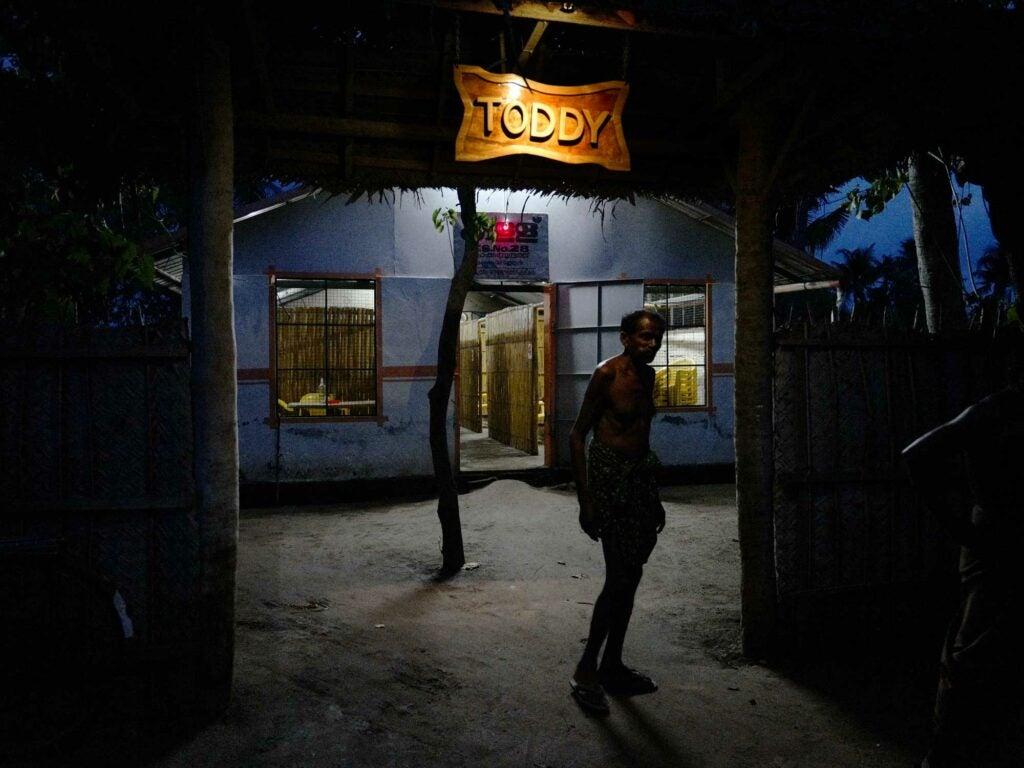
“What do you expect? Liquor is so expensive in Kerala!”
If you’ve lived in Kerala long enough, you’ve probably heard that sentence more times than you can count.
An electrician quotes ₹1,000 for a day’s work. A plumber asks more than expected. Construction labour is costlier than in neighbouring states. The explanation often comes quickly: workers need higher wages because liquor costs more in Kerala.
It sounds logical. After all, if a worker spends a significant part of the day’s earnings on an evening drink, wouldn’t higher wages naturally follow? And if wages rise, wouldn’t every service—from house painting to haircuts—become more expensive?
It is a persuasive argument. But is it actually true?
That simple question led me to undertake a comparative study of Kerala, Tamil Nadu, Karnataka and Telangana. (See this Research Paper for details of the study)
Looking Beyond Popular Belief. Public discussions often rely on anecdotes. I wanted to see what the numbers actually said. I collected data covering three financial years (2023–24 to 2025–26), including:
- (i) construction labour wages,
- (ii) prices of commonly consumed budget liquor,
- (iii) prices of everyday urban services,
- (iv) state alcohol taxation policies.
Instead of comparing prices alone, I developed three affordability indicators:
1. Liquor Affordability Ratio (LAR) – How much of a day’s wage is needed to buy a 180 ml bottle?
2. Evening Leisure Cost Index (ELCI) – How much of a day’s wage is needed for a typical evening out?
3. Alcohol Tax Burden Index (ATBI) – How much of the retail liquor price is actually tax?
The goal was simple: compare affordability, not just prices.
The First Surprise: The data confirmed what most people already know.
Kerala imposes the highest tax burden on Indian Made Foreign Liquor (IMFL) among the four states studied. Naturally, retail liquor prices are also among the highest. So far, public perception is correct.
The Second Surprise: High prices do not necessarily mean low Affordability. That may sound contradictory.
Although a bottle costs more in Kerala, construction workers also earn substantially higher wages than their counterparts in neighbouring states. Once wages are taken into account, Kerala is not the least affordable state for an evening drink.
A price tells us what something costs. Affordability tells us what it costs relative to income.
The lesson is straightforward: price and affordability are not the same thing. A ₹180 bottle may actually be easier to buy than a ₹140 bottle if incomes are proportionately higher.
The Third Surprise: Many people also believe that higher wages automatically lead to higher service charges. The comparison suggests a more nuanced picture.
When I examined representative service prices from Kochi, Chennai, Bengaluru and Hyderabad, Bengaluru frequently emerged as the most expensive city. Kerala’s service costs were generally comparable with Hyderabad and only moderately higher than Chennai.
In other words, wages alone cannot explain why services cost what they do.
Looking at the Bigger Picture
If alcohol taxation is only part of the story, what explains Kerala’s economic landscape?
The evidence points to several structural factors acting together:
- decades of Gulf remittances that raised household incomes,
- an ageing population and shortage of local manual labour,
- organised labour and collective bargaining,
- continued inflow of interstate migrant workers,
- higher living standards and consumer expectations.
- Rather than operating independently, these forces reinforce one another.
Kerala appears to have evolved what I describe as a high-tax, high-wage equilibrium—an economy where expensive liquor, higher wages and elevated living costs coexist because they are shaped by broader structural forces.
Changing the Question- Perhaps the real question is not: “Why is liquor so expensive?”
A better question might be: “How affordable is an evening after a day’s work?”
That small change in perspective shifts the debate from emotion to economics.
What This Study Suggests:
(1) This study does not conclude that high liquor taxation causes higher wages.
(2) Instead, it suggests that Kerala’s labour market is influenced by a combination of taxation, wages, remittances, demographic change, labour shortages and migration. Higher liquor prices are one visible part of a much larger economic system.
(3) For policymakers, researchers and ordinary citizens alike, the findings offer a reminder that economic relationships are rarely explained by a single variable. Understanding affordability requires looking not only at what people pay, but also at what they earn.
Research at a Glance:
Study Area: Kerala, Tamil Nadu, Karnataka and Telangana (2023–24 to 2025–26)
Data Analysed: Labour wages, Retail liquor prices, Urban service costs, Alcohol taxation
Key Findings:
Kerala has the highest alcohol tax burden.
Kerala has among the highest retail liquor prices.
Higher wages substantially preserve affordability.
Bengaluru—not Kochi—often records the highest service costs.
Alcohol taxation alone does not explain Kerala’s labour market.